
Lagos State Governor, Babajide Olusola Sanwo-Olu has approved ₦100 million for the Child Nutrition Fund (CNF)—a result of sustained advocacy engagements facilitated by the Civil Society-Scaling Up Nutrition in Nigeria (CS-SUNN) with support from UNICEF. The approval announcement conveyed by Dr. Kemi Ogunyemi, Special Adviser to the Governor on Health, during a strategic advocacy meeting organized by CS-SUNN this August 2025, marks a key moment in the state’s nutrition financing efforts.

This approval is more than just a funding line item! It is a bold political commitment and action for Lagos’ future generations. It will ensure that essential, life-saving nutrition interventions especially nutrition commodities like Ready To Use Theraputic Foods (RUTF), Mutiple Micronutrient Supplementation (MMS), Vitamin A supplementation among others receive the financial backing required to reach more children, mothers and families across Lagos State. For nutrition advocates and development practitioners, this decision affirms that evidence-based advocacy coupled with strategic political engagement can shift the dial on policy and funding in favour of vulnerable populations.
Why This Matters: The Malnutrition Crisis and the Promise of CNF:
Nigeria’s high burden of malnutrition continues to jeopardize the health and future productivity of its citizens. The prevalence of anaemia among women of reproductive age remains alarmingly high in Nigeria with five out of every 10 Nigerian women of reproductive age (58%) suffering anaemia- NDHS 2018. Multiple Micronutrient Supplementation (MMS) has emerged globally as a scientifically proven solution for preventing anaemia, supporting healthy pregnancies and improving birth outcomes. Yet, MMS uptake remains low due to poor awareness, weak supply chains and non-prioritization of this critical nutrition commodity.
In tandem, the lack of sustained funding and fragmented nutrition coordination continues to stall the implementation of high-impact interventions. The absence of dedicated nutrition departments within MDAs and insufficient maternity protection policies such as six-month paid maternity leave, further weaken Nigeria’s fight against malnutrition. The World Health Organization (WHO) recommends six months of exclusive breastfeeding, yet the reality for many working mothers is the inability to meet this due to inadequate paid leave provisions, including absence of breastfeeding corners in workplaces.

Lagos, often seen as Nigeria’s economic powerhouse, is not exempt from the pervasive burden of malnutrition. Anaemia, undernutrition and stunting continue to impact thousands of children, especially in underserved communities. These challenges are worsened by low budget releases, weak multisectoral coordination and a lack of institutional structures (non establishment of nutrition departments across line MDAs) to implement targeted interventions effectively.

The Child Nutrition Fund (CNF) was conceived as a sustainable, state-led co-financing mechanism (with donors) to address these gaps. It aims to coordinate and match domestic and donor resources, support the local production of therapeutic and complementary foods and fund high-impact interventions/nutrition commodities such as Multiple Micronutrient Supplementation (MMS), breastfeeding promotion and community-based nutrition services. By approving the ₦100 millionm Lagos State has set a precedent that aligns with global best practices and the implementation of the state’s own Multisectoral Plan of Action for Food and Nutrition (LSMPFAN).
The Advocacy that Delivered Results
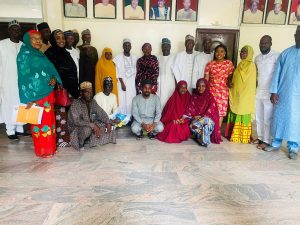
From August 18–22, 2025, CS-SUNN, in collaboration with the Lagos State Committee on Food and Nutrition (SCFN) with support from UNICEF, organized a high-level breakfast meeting and targeted advocacy visits to six key Ministries, Departments and Agencies (MDAs) in Lagos. These engagements were designed not just as routine dialogues, but as strategic interventions to raise awareness drive accountability and secure tangible outcomes. The breakfast meeting was attended by over 30 senior government officials, including Permanent Secretaries, Commissioners and Directors drawn from the Ministries of Health and social welfare, Women Affairs and Poverty Alleviation (WAPA), Education, Environment, Economic Planning and Budget (MEPB) and Youth and Social Development (MYSD).

These engagements were designed to:
- Raise political awareness on anaemia prevention through MMS.
- Secure commitments for the approval and release of the Child Nutrition Fund.
- Advocate for the creation of dedicated Nutrition Departments across MDAs.
- Push for the institutionalization of six-month paid maternity leave.
- Foster a multisectoral approach to nutrition governance and financing.
At the meeting, CS-SUNN and the SCFN presented compelling evidence and disaggregated state-specific nutrition data showcasing Lagos’ burden of child malnutrition, maternal anaemia rates and the potential impact of MMS and maternity leave extension on Maternal and Child Health outcomes. Using localized data, success stories from other states and economic arguments for investing in nutrition, CS-SUNN built a strong case for both the approval of the CNF and the establishment of dedicated Nutrition departments across MDAs. These presentations underscored the role of civil society in brokering multisectoral collaboration and leveraging political entry points for advancing nutrition.
Momentum Gained: A Wave of Commitments Across Government Sectors
A breakthrough was the successful channelling of advocacy efforts to the Office of the Governor—spearheaded by Dr. Kemi Ogunyemi—which culminated in the re-approval of ₦100 million for the Child Nutrition Fund, signifying strong political will and high-level commitment to advancing nutrition in Lagos State.
Six MDAs received personalized advocacy visits; deepening engagements and strengthening political commitment across multiple sectors. The engagements generated a wave of bold declarations and commitments:
- The Permament Secretary (PS), Ministry of Women Affairs and Poverty Alleviation, Mrs. Rianat Ajibike Onigbanjo committed to enhancing nutrition financing within her ministry.
- The PS, Ministry of Environment, Dr. Tajudeen Gaji noted: “I have doubled the nutrition budget and would do even better in the next cycle.”
- PS, Ministry of Education, Mrs. Abisola Adegbite stated: “Nutrition will take a new shape in terms of funding and structure.” She committed to exploring how a nutrition unit could be integrated into her ministry.
- PS, Ministry of Youths and Sports Development, Pharm. (Mrs.) Oke Osanyintolu emphasized: “There is a need to increase the nutrition budget. I will create a nutrition unit in the ministry.”

These pronouncements indicate a paradigm shift in how government actors now perceive nutrition in Lagos—not merely as a health issue, but as a cross-cutting development and multisectoral priority.

The engagements also laid a firm foundation for continued advocacy to the Executive Governor of Lagos State, the Speaker of the House of Assembly and other relevant stakeholders for:
- Legislative support for six-month paid maternity leave.
- State-level scale-up and procurement of MMS.
- Annual nutrition budget tagging and timely releases.

CS-SUNN’s Role: Strategic Convening and Technical Facilitation
Throughout the process, CS-SUNN played a catalytic role—mobilizing stakeholders, developing advocacy tools, framing key messages and coordinating seamlessly with the SCFN ensuring that meetings were inclusive, data-driven and solution-focused. The use of targeted messaging around anaemia prevention through MMS, the need for extended paid maternity leave and the economic benefits of investing in child nutrition helped to anchor discussions and inspire action among policymakers.
Click here to download, read and disseminate “A Call to Action on Nutriton”, the fact sheet, presented to the Lagos State Government.
The strategic engagements in Lagos reaffirm CS-SUNN’s positioning as a leading civil society voice championing nutrition policy and financing in Nigeria. Through evidence, strategic partnerships and policy advocacy, CS-SUNN continues to build bridges between technical needs and political action—one state at a time. We are grateful for support from organiztaions like UNICEF who continue to support CS-SUNN towards ensuring that every Nigerian has food and is nutrition secure.