
Empowering women and girls for optimal nutrition and a healthier future.

Every morning before sunrise, Monica Aya arranges sacks of acha, baskets of potatoes, basins of maize and piles of other food items in her market stall in Lafia Morden market, Nasarawa State. As a member of the Market Men and Women Association in the state, she works daily to promote healthy living. But she tells CS-SUNN that the reality is harsh.
“Because of the financial challenges we face today, most women buy more corn, rice and carbohydrate-laden foods,” she says. “Proteins like beans, meat, chicken and eggs have become too expensive. In my community, children and women keep falling sick due to vitamin deficiencies and from eating tuwo masara (corn meals) morning, afternoon and night.”

She tells us that for years, she has watched women come to the market with the same difficult dilemma: how to feed their families when food prices continue to rise. Many women walk away with bags of maize, rice and other filling foods because they are cheaper and can feed more mouths. For many households, survival comes first. Nutrition comes later.
Monica’s story is not unique. It is the daily reality for thousands of women and children across Nasarawa State and even beyond.
The Heavy Burden of Malnutrition
Recent nutrition data paints a worrying picture. According to the NDHS 2023/2024 an estimated 418,498 children under five in Nasarawa State are stunted, meaning they are too short for their age due to chronic malnutrition.
More than 114,000 children suffer from wasting, a dangerous form of malnutrition that leaves children too thin for their height and significantly increases their risk of death. Over 263,000 children are underweight.
The consequences extend far beyond childhood. Poor nutrition contributes to poor school performance, reduced productivity, increased health costs and lost economic opportunities.
Experts estimate that failure to prevent and address malnutrition can cost countries up to 15 percent of their Gross Domestic Product through lost productivity and poor human capital outcomes.
For women and girls, the burden is even greater.Anaemia, poor diets, limited economic opportunities and inadequate access to nutrition information continue to undermine the health and wellbeing of many women across the state.
Yet despite the scale of the challenge, there is growing recognition that nutrition is not merely a health issue. It is an economic issue, a development issue, a gender issue and increasingly, a leadership issue- political will.
What Government Has Done!
Nigeria has already taken an important step through the development of the National Guideline for Women and Girls Empowerment for Optimal Nutrition, a landmark framework that recognizes that improving nutrition goes beyond food and health services alone. The Guideline acknowledges that women’s nutritional status is deeply influenced by a range of social, economic and structural factors that determine their ability to make decisions, access resources and care for themselves and their families.
At its core, the Guideline promotes a multisectoral approach that brings together interventions across health, education, agriculture, social protection, finance, gender and governance sectors to address the root causes of malnutrition among women and girls.
The framework is built around key pillars including gender equality and women’s rights, participation and inclusion in decision-making processes, increased access to productive resources and opportunities, capacity building and skills development, and economic and social empowerment. It recognizes that women who are educated, economically empowered, financially included and actively involved in household and community decision-making are more likely to access nutritious diets, seek quality healthcare, support positive nutrition practices and invest in the wellbeing of their children.
For women who patronise Monica’s stall, this vision is particularly relevant. Access to affordable credit, livelihood opportunities, nutrition education and stronger social support systems can help transform the difficult choices many women currently face between feeding their families and nourishing them adequately.
From Policy to Practice: Women Leading Nutrition Change
The Women in Power Conference was conceived as a practical mechanism for translating this national vision into measurable action at the sub-national level. While the National Guideline provides the policy direction, the initiative creates the leadership platform needed to drive implementation, accountability and advocacy within states and communities.

By mobilizing influential women leaders from government, the legislature, civil society, faith-based institutions, academia and the private sector, the initiative seeks to transform policy commitments into concrete interventions that improve the lives of women and girls. These leaders are uniquely positioned to influence policies, champion investments, mobilize resources, strengthen community engagement and promote the multisectoral actions required to address the root causes of malnutrition among women and girls.
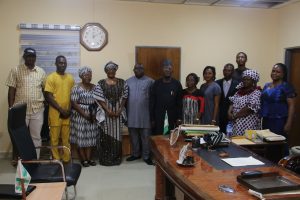
This conviction formed the foundation of the Women in Power Conference (WIPC) in Nasarawa State this June 2026. Convened through a partnership between the Federal Ministry of Women Affairs, the Nasarawa State Ministry of Women Affairs and Civil Society-Scaling Up Nutrition in Nigeria (CS-SUNN), the conference brought together over 40 women leaders from government, legislature, education, agriculture, civil society, religion and community structures. It was a conference designed to secure commitments and recommendations. Commitments that could translate influence into action, policy into implementation and leadership into measurable improvements in the lives of women and children.
Eleven Women. One Mission.
At the heart of the event was the inauguration of eleven Nutrition Champions. These women were selected because of their ability to influence decisions, shape policies, mobilise resources and reach communities. Their mission is clear. To become advocates, mobilisers and accountability drivers for improved nutrition outcomes across Nasarawa State.
Former CS-SUNN Steering Committee Co-Chair, Aji Robinson, presented the Terms of Reference (ToR) to the champions, charging them to become high-level ambassadors across four pillars:
- Advocacy and Policy Influence — Engaging policymakers, pushing for Multiple Micronutrient Supplementation (MMS), and ensuring timely release of budgeted funds.
- Economic & Livelihood Linkages — Mobilizing women into savings groups, supporting nutrition-sensitive livelihoods, kitchen gardens, skills development, and market linkages.
- Operationalization of Guidelines — Disseminating the National Guideline and developing state-level action plans.
- Public Awareness and Strategic Partnerships — Using media platforms and building alliances to drive behaviour change and accountability.

Powerful Voices, Strong Commitments
Hajiya Silifat Abdullahi Sule, First Lady of Nasarawa State and the first of the 11 champions, set the tone, leaving no doubt about her commitment.
“I am proud to lead the inauguration of the 11 Nutrition Champions in Nasarawa State today, with myself as the first champion! I appreciate the Honourable member for emphasising the need to expand women’s voices and representation in the legislature. I will personally take this important message to His Excellency, the Governor. I fully support this programme — I support it, I support it, I support it! As a Nutrition Champion, I remain committed to driving advocacy for anaemia prevention, women’s economic empowerment and girl-child education, while pushing for stronger legislative backing to protect the rights of women and children across our state.”
For Dr. Hajara Ibrahim Danyaro, Chairperson of the House Committee on Women Affairs and currently the only female member of the Nasarawa State House of Assembly, the initiative represented something deeper.
“Do we truly have women in power? … Yet, in the Nasarawa State House of Assembly, I remain the only woman… Nothing has changed and I continue to pity the women and children of Nasarawa State… But I stand committed: I am fully committed to this cause as a Nutrition Champion to continue to provide the necessary legislative backing to protect the rights of women and children across the state. We will push for updated, current data (2026) to guide real solutions, especially in LGAs with the highest burden like Akwanga, so that Her Excellency and the government can take decisive action.”
The Head of Service, Barrister Abigail Waya, committed her office and personal efforts to ensuring that women and girls have improved access to nutritious food, better health outcomes and opportunities to thrive.
“I am committed to championing nutrition in Nasarawa State. I willingly offer myself and my services and will dedicate my best efforts to ensuring women and girls have access to nutritious food, improved health, and opportunities to thrive for the development of Nasarawa state and Nigeria as a whole.”
Similarly, the Honourable Commissioner for Women Affairs and Humanitarian Services, Barrister Hauwa Samuel Jugbo, pledged to intensify sensitization efforts aimed at reducing malnutrition among women and girls.
“I fully commit myself to this task that has been placed on us. I am committed to ensuring that women and children in Nasarawa State attain the nutrition and wellbeing they deserve. I will work to reduce the level of malnutrition among girls and women in my state through sensitization”.
The Executive Secretary of SUBEB and FOMWAN Amirah, Dr. Hashiya Ahmed, committed thus: “I am committed to advancing a future where our children, girls, and women are free from malnutrition and empowered to reach their full potential.”
Linking Nutrition and Economic Empowerment
One recurring message throughout the conference was that nutrition cannot be separated from economic empowerment. Women who lack access to livelihoods, financial services and productive opportunities often struggle to provide nutritious diets for themselves and their families.
This reality is one that the Director General of the Human Capital Development Agency, Habiba Balaraba Suleiman, understands well.
“Women’s empowerment and nutrition go hand in hand. We have before now covered almost 5 LGA in empowering women with free interest loan of N100,000 each and am sure they are using this money judiciously. 500 women have been given free interest loan in Akwanga. The plan is to cover all the women in the Nasarawa state. We assure you that we are support nutrition in this state 100%. We will continue to support women through economic empowerment initiatives while advancing nutrition across all communities in Nasarawa State.”
For women who shop from Monica’s store, such interventions could mean the difference between choosing the cheapest available food and choosing the most nutritious option.
The Permanent Secretary, Ministry of Education, Dr. Khadijat Musa Suleiman, committed to advancing nutrition education and awareness among women and girls across schools in Nasarawa State.
“When you educate a woman, you educate a nation. I commit to promoting nutrition knowledge and awareness among women and girls across Nasarawa State. Am happy that this inauguration has taken place, I will make sure to go round all the schools in Nasarawa state to advance nutrition education.”
The Permanent Secretary, Ministry of Agriculture, Hajiya Salamatu Sani Oseze, reaffirmed her commitment to creating an enabling environment for sustainable nutrition outcomes across the state.
“I reaffirm my commitment to promoting improved nutrition and creating an enabling environment for sustainable nutrition outcomes across Nasarawa State.”
Recognizing the critical role of communication in driving behaviour change, the Permanent Secretary, Ministry of Information, Culture and Tourism, Hajiya Hadiza Dahiru, pledged to utilize government information platforms to raise awareness on good nutrition.
“We are committed to championing this cause and acknowledge all the responsibilities placed on us in line with the ToR. We commit to using our information platforms to sensitize women and children on the importance of good nutrition”.
The President of the National Council for Women Societies (NCWS), Nasarawa State Chapter, Mrs. Mary Meshi, pledged to extend the advocacy campaign through the NCWS network across the state.
“I pledge to carry this advocacy to the NCWS in order to eradicate malnutrition in the state”.
At the grassroots level, Mrs. Victoria Yakubu, Chairperson of the Women Wing of the Christian Association of Nigeria (WOWICAN), Nasarawa State, committed to taking nutrition messages directly to rural women and communities.
“As a Nutrition Champion and Leader of Christian Women in Nasarawa State, I make this solemn commitment today: I will personally carry this message to our women in the rural areas who do not yet believe in the power of good nutrition. I will create awareness and teach them that proper nutrition is very good for the body. Our women cannot continue eating only tuwo masara morning, afternoon and night. I will boldly tell them that it is not a sin to embrace good nutrition. This knowledge will help our women and children not to perish. Whether you are a strict adherent to the bible, you must take your nutrition seriously and not play with it. This is the message I am committed to taking to the grassroots. As a Champion, I will champion better nutrition for our women and families across Nasarawa State.”
A representative of the Director Nutrition from the Federal Ministry of Women Affairs, Mr. Michael Adgoke noted the state’s readiness: “The First Lady repeating her support three times shows that Nasarawa State is ready to take ownership of this initiative. This commitment will enable us to establish dedicated nutrition budget lines, create nutrition departments and implement other key interventions that will significantly improve nutrition outcomes across the state.

Monia’s hope reflects the feelings of many Nigerian women who have no avenue to express their voices: “I understand what has happened here today…I understand that these women who have accepted this nutrition champions recognition understand that there is a problem in Nasarawa and that they are willing to help us women. I have a believe that these women will deliver, some of them are already delivering and I know they have the capacity to deliver on these responsibility of empowering women. I want the champions to organise more programmes for women and the girl child, events on sensitization, so those at the grassroots can have more knowledge on nutrition”, she said.

Beyond Inauguration: Turning Commitments into Action
According to CS-SUNN Programme Manager, Ridwan Awosanya, the inauguration is only the beginning. The initiative is designed to build political will, mobilise resources and strengthen the policy environment for nutrition. “Prior to the inauguration, extensive advocacy engagements were conducted with the champions to deepen their understanding of the nutrition situation and the cost of inaction. The champions will serve for an initial one-year period, during which their commitments will be tracked, reviewed and assessed. Progress meetings and evaluation sessions will monitor actions taken and results achieved”
A New Chapter for Women and Girls
For Monica Aya, the significance of the conference lies not in the speeches or ceremonies. It lies in hope. Hope that influential women are listening, that they understand the struggles faced by ordinary women and that they will act.
“I believe these women understand there is a problem,” she says. “I believe they are willing to help us.”
Her hopes mirror those of thousands of women across Nasarawa State and the country at large. Women who want access to better livelihoods. Women who want healthier pregnancies. Women who want their children to grow, learn and thrive. Women who simply want a future where nutrition is no longer a privilege, but a right.
The inauguration of the eleven Nutrition Champions will not solve Nasarawa’s nutrition challenges overnight. But it represents something important. A recognition that leadership matters, that women in positions of influence can drive change and that when women in power choose to champion nutrition, the benefits can extend far beyond conference halls and government offices. They can reach markets, schools, health facilities, communities and homes and in the end the women and children whose futures depend on it.